Hardship as Teacher, Overconfidence as Thief: Why Crypto Traders Forget What Their Worst Trades Taught Them
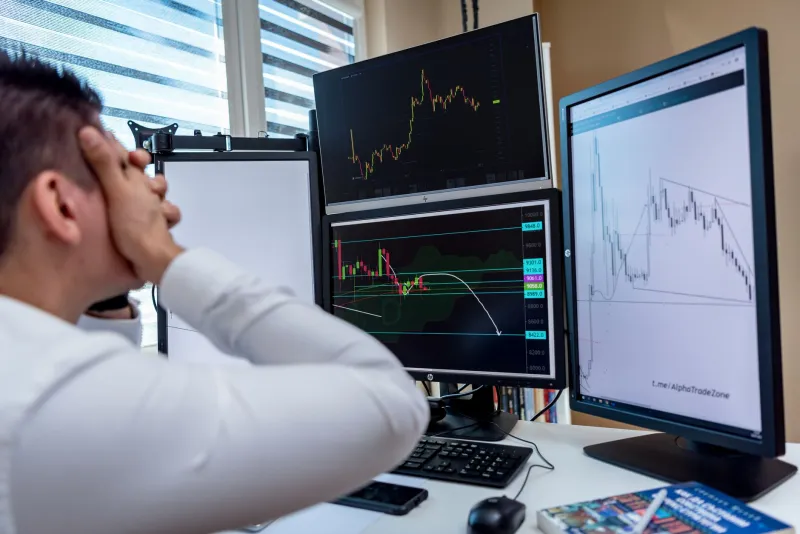
There is a peculiar irony embedded in the experience of most retail crypto traders: the moments of greatest clarity almost always arrive immediately after the most devastating losses. The trader who bought a speculative altcoin at its peak and watched it shed 85 percent of its value within six weeks does not need a textbook to understand position sizing. The investor who held leveraged positions through a sudden liquidity event in 2022 does not require a lecture on liquidation cascades. The lesson arrives — viscerally, unmistakably — through the account balance.
And then the market recovers. And those lessons, one by one, begin to disappear.
This is the crypto confidence trap: not the recklessness of inexperience, but the systematic abandonment of earned wisdom during periods when rising prices make that wisdom feel unnecessary. Understanding how this cycle operates — and more importantly, how to interrupt it — is one of the more consequential skills a US digital asset trader can develop.
Why Losses Create Clarity (And Why That Clarity Is Fragile)
Behavioral economists have long documented what is known as loss aversion — the tendency for human beings to feel the psychological impact of losses more acutely than equivalent gains. In crypto markets, this asymmetry has an instructive side effect. Losses force a level of post-trade analysis that winning trades rarely demand. When a position collapses, traders instinctively search for the mechanism: What did I miss? What signal was I ignoring? Why did I size this way?
That forensic self-examination produces genuine market intelligence. Traders who survive painful drawdowns frequently emerge with a more sophisticated understanding of market structure, entry discipline, and risk calibration than they possessed before. The loss, paradoxically, functions as an accelerated education.
The fragility of that education, however, is structural. Human memory is not a recording device — it is a reconstructive process heavily influenced by current emotional state. When markets enter a sustained uptrend and nearly every position generates positive returns, the emotional context that made a painful lesson memorable begins to fade. What felt like an inviolable rule during a drawdown gradually softens into a vague preference, and eventually becomes nothing more than a forgotten footnote.
Research on decision-making under varying emotional conditions supports this pattern. Traders operating in euphoric market environments demonstrate measurably reduced risk sensitivity compared to the same traders operating in neutral or declining conditions. The bull market does not just change prices — it changes cognition.
The Bull Run Reset: How Overconfidence Overwrites Experience
The 2020–2021 crypto cycle offers a particularly instructive case study. Thousands of US retail traders who had been burned during the 2018 bear market returned to the market with stated commitments to more disciplined behavior: smaller position sizes, tighter stop-loss thresholds, reduced exposure to speculative assets. For a period, those commitments held.
But as Bitcoin climbed toward its 2021 highs and altcoin markets entered a period of extraordinary momentum, a familiar pattern reasserted itself. Position sizes crept upward. Stop-loss levels were widened or abandoned entirely. Speculative allocations that were supposed to represent five percent of a portfolio quietly expanded to thirty or forty percent, justified by the logic that the market was "different this time."
It was not different. And the correction that followed in 2022 delivered the same lessons — at higher cost — to many of the same traders who had supposedly already learned them.
This is not a failure of intelligence. It is a failure of architecture. Individual willpower and market memory are insufficient defenses against the psychological pressure of a sustained bull environment. What experienced traders understand, and what behavioral data consistently confirms, is that the preservation of hard-won wisdom requires external structure — systems that operate independently of emotional state.
Building Systems That Remember What You Will Forget
The most effective approach to this problem is deceptively straightforward: treat every significant loss as a data point that must be codified before the emotional urgency fades. Practically, this means maintaining a structured trade journal that records not just the mechanics of a bad trade, but the reasoning, the emotional state, and the specific rule or principle that was violated.
This is not journaling in the reflective, open-ended sense. It is forensic documentation — closer to an incident report than a diary. The goal is to create a record specific enough that a future version of yourself, operating in a completely different emotional environment, can still extract the operational lesson.
Some traders take this further by establishing what might be called a "bull market pre-commitment protocol" — a set of written constraints on portfolio behavior that are authored during periods of drawdown or flat performance, when judgment is least distorted by euphoria. These constraints are then treated as binding during subsequent bull phases, with explicit friction built into any attempt to override them. Requiring a 48-hour waiting period before increasing speculative allocations, for example, or mandating a written justification that must be reviewed against prior loss documentation before any position is sized above a predetermined threshold.
The friction is the point. Overconfidence operates quickly and intuitively. Structural constraints force deliberation.
The Role of Market Cycle Awareness in Sustaining Discipline
Another dimension of this problem involves how traders conceptualize their position within broader market cycles. One of the more reliable features of crypto market psychology is the tendency for participants to treat the current phase as permanent. During bear markets, recovery feels implausible. During bull markets, the idea that conditions might reverse feels like excessive caution.
Developing a more durable cycle awareness — one grounded in historical on-chain data, funding rate patterns, and long-term market structure rather than recent price action — provides a cognitive anchor that helps resist the emotional pull of prevailing conditions. Traders who can situate themselves within a multi-year cycle with some degree of objectivity are better positioned to apply bear-market discipline during bull-market conditions, not because they are pessimistic, but because they recognize that the rules of sound risk management do not change with the direction of price.
This is not a call for perpetual defensiveness. Capturing upside during strong market phases is a legitimate and important part of building digital asset wealth. The distinction lies in doing so within a framework that was constructed with clear eyes, rather than abandoning the framework entirely because the market is rewarding those who ignore it — temporarily.
What Separates Traders Who Compound Wisdom From Those Who Lose It
The traders who consistently navigate multiple crypto cycles without regressing to pre-loss behavior share a common characteristic: they have externalized their discipline. Their risk management does not depend on remembering how bad a previous loss felt. It depends on systems, written rules, and pre-committed constraints that remain in force regardless of how the current market feels.
This is the fundamental shift that separates experience that compounds from experience that evaporates. The market will always generate new opportunities to repeat old mistakes. The question is whether your decision-making infrastructure is robust enough to make repetition genuinely difficult — or whether it relies entirely on a memory that bull markets are specifically designed to erase.
At CoinRokka, we believe that informed trading is structural trading. The confidence that comes from a rising market is not the same as the competence that comes from surviving a falling one. Preserving the distinction between those two things, especially when prices are climbing and caution feels unnecessary, may be the most valuable edge available to the US retail trader.