Phantom Liquidity: How Low-Volume Altcoins Become Inescapable Traps and What US Traders Can Do About It
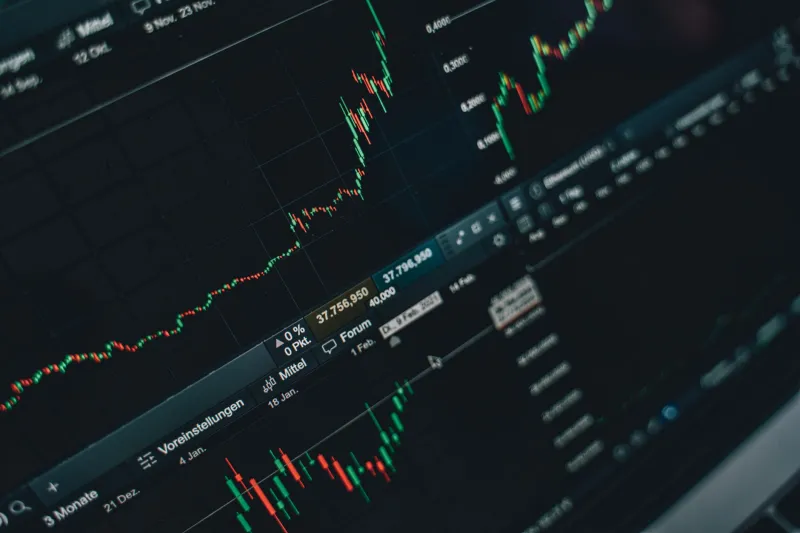
There is a particular kind of loss that does not announce itself loudly. It does not arrive in a sudden crash or a dramatic rug pull. Instead, it materializes quietly—the moment a trader attempts to exit a position and discovers that the market they believed existed simply does not. This is the liquidity mirage: an altcoin that appears tradeable under normal conditions but becomes effectively illiquid precisely when conditions deteriorate and exits become urgent.
For US retail and institutional traders alike, understanding the mechanics of phantom liquidity is not optional. It is foundational risk management.
What Liquidity Actually Means in Crypto Markets
In traditional equity markets, liquidity is broadly supported by regulated market-makers, exchange-mandated minimum spreads, and high institutional participation. Crypto markets—particularly those involving lower-capitalization altcoins—operate under no such structural guarantees. Liquidity here is discretionary, fragmented across multiple exchanges, and disproportionately reliant on a small number of participants willing to quote both buy and sell prices at any given moment.
When market participants refer to an altcoin as "liquid," they typically mean that the token can be bought or sold in reasonable size without dramatically moving its price. But this definition contains a hidden conditional: under current conditions. Markets are not static. Liquidity is a function of sentiment, volatility, and the willingness of market-makers to maintain exposure—all of which can evaporate simultaneously.
The Bid-Ask Spread as a Real-Time Liquidity Signal
The bid-ask spread is among the most immediate and underutilized indicators available to any trader. In a genuinely liquid market, the spread between the highest price a buyer will pay and the lowest price a seller will accept remains tight—often fractions of a percent for major assets like Bitcoin or Ethereum. For low-volume altcoins, spreads can widen to two, five, or even ten percent under normal conditions, and far more during periods of stress.
A widening spread is not merely a transaction cost inconvenience. It is a signal that market-makers are either withdrawing their quotes or demanding greater compensation for the risk of holding inventory. When spreads expand rapidly—particularly during a broader market downturn—it indicates that professional liquidity providers are stepping back, leaving retail traders to transact against one another at increasingly unfavorable prices.
US traders should treat any altcoin with a resting bid-ask spread exceeding one percent as a position that carries embedded exit risk. Spreads above three percent in a low-volatility environment should be considered a structural warning.
Order Book Depth: Looking Beyond the Top of the Book
Spot price and recent volume figures are the metrics most traders review before entering a position. Both can be deeply misleading. A token may display an attractive recent price and reasonable daily volume, yet possess an order book so thin that selling even a modest position would require moving down through multiple price levels—each with diminishing bid size.
Order book depth—specifically, the cumulative buy-side volume available within two to five percent of the current market price—reveals how much capital can realistically exit without significant slippage. Traders should examine this figure not just at the moment of entry, but periodically throughout the holding period. A token that once supported $200,000 in depth within two percent of market price may quietly deteriorate to $20,000 over several weeks as market-maker interest fades.
Many US-based exchanges and aggregators, including Coinbase Advanced Trade and various on-chain analytics platforms, expose order book depth data in accessible formats. Making this review a standard component of position monitoring—not just pre-entry due diligence—is one of the most practical adjustments a trader can implement.
Volume Concentration and the Market-Maker Withdrawal Pattern
High reported trading volume does not confirm healthy liquidity. In altcoin markets, volume is frequently concentrated across a handful of wallets or accounts, and a meaningful portion may reflect wash trading—a practice that artificially inflates activity metrics without creating genuine two-sided market depth.
More concerning for active traders is the pattern of market-maker withdrawal. Professional liquidity providers are not passive participants. They monitor their inventory risk, funding costs, and the probability of adverse price movement. When any of these factors shift unfavorably—as they reliably do when sentiment deteriorates—market-makers reduce or eliminate their quoting activity. This withdrawal typically precedes visible price decline, meaning the liquidity disappears before the price chart reflects the underlying stress.
Practical indicators of this pattern include: a declining number of distinct addresses transacting in a token over a rolling seven-day period, a reduction in the frequency of trades relative to volume (suggesting fewer, larger transactions rather than distributed activity), and a narrowing of the exchanges on which meaningful volume occurs. When a token's volume consolidates onto a single offshore exchange with limited US regulatory oversight, the exit options available to American traders become structurally constrained.
Practical Frameworks for Assessing True Exit Potential
Rather than relying on headline volume figures, US traders can apply a more rigorous pre-entry checklist:
1. Slippage simulation. Before entering a position, estimate the actual execution price for an exit of your intended size by examining order book depth at your target exchange. If executing your full position would require moving the market by more than one to two percent, size down accordingly or reconsider the trade.
2. Volume-to-market-cap ratio scrutiny. A token reporting daily volume that represents a significant percentage of its total market capitalization warrants skepticism. Ratios above 20 to 30 percent frequently indicate manipulated or concentrated volume rather than genuine distributed activity.
3. Multi-exchange presence verification. Tokens listed on three or more regulated or high-volume exchanges with independently verifiable order books offer more reliable exit pathways than tokens dependent on a single venue. Cross-reference volume figures across platforms to identify discrepancies.
4. Historical spread tracking. Some analytics tools maintain historical bid-ask spread data. Reviewing spread behavior during previous market downturns reveals how a token's liquidity has responded under stress—a far more informative metric than current spread alone.
5. Market-maker activity monitoring. On-chain data can reveal whether known market-making wallets have been reducing their token holdings. While not always identifiable with certainty, significant outflows from wallets displaying high-frequency, symmetrical trading patterns may indicate professional withdrawal.
Sizing and Exit Planning as Liquidity Risk Management
Even with thorough pre-entry analysis, no framework eliminates liquidity risk entirely in altcoin markets. Position sizing remains the most reliable mitigation tool. Limiting exposure to any single low-liquidity token—regardless of conviction—ensures that a deteriorating exit environment does not translate into a portfolio-level event.
Equally important is pre-defining exit criteria before entering a position. Traders who establish price levels, time horizons, and maximum acceptable slippage thresholds in advance are significantly less likely to find themselves frozen by the psychological difficulty of accepting a bad exit when conditions worsen. The cost of a slightly unfavorable exit executed on schedule is almost always lower than the cost of a significantly worse exit executed under duress.
The Broader Context for US Traders in 2025
The regulatory environment surrounding cryptocurrency trading in the United States continues to evolve, with increasing scrutiny on exchange practices, token disclosures, and market manipulation. This trajectory is likely to improve market structure over time, but in the near term, US traders remain exposed to the liquidity risks endemic to a market that is still maturing.
Phantom liquidity is not a rare edge case. It is a recurring feature of altcoin markets, and it disproportionately affects traders who enter positions based on surface-level metrics without examining the structural depth beneath them. Developing the discipline to interrogate liquidity before committing capital—and to monitor it continuously thereafter—is among the most valuable skills any active digital asset investor can cultivate.