Where Should Your Crypto Live in 2025? A US Investor's Guide to Custody Decisions
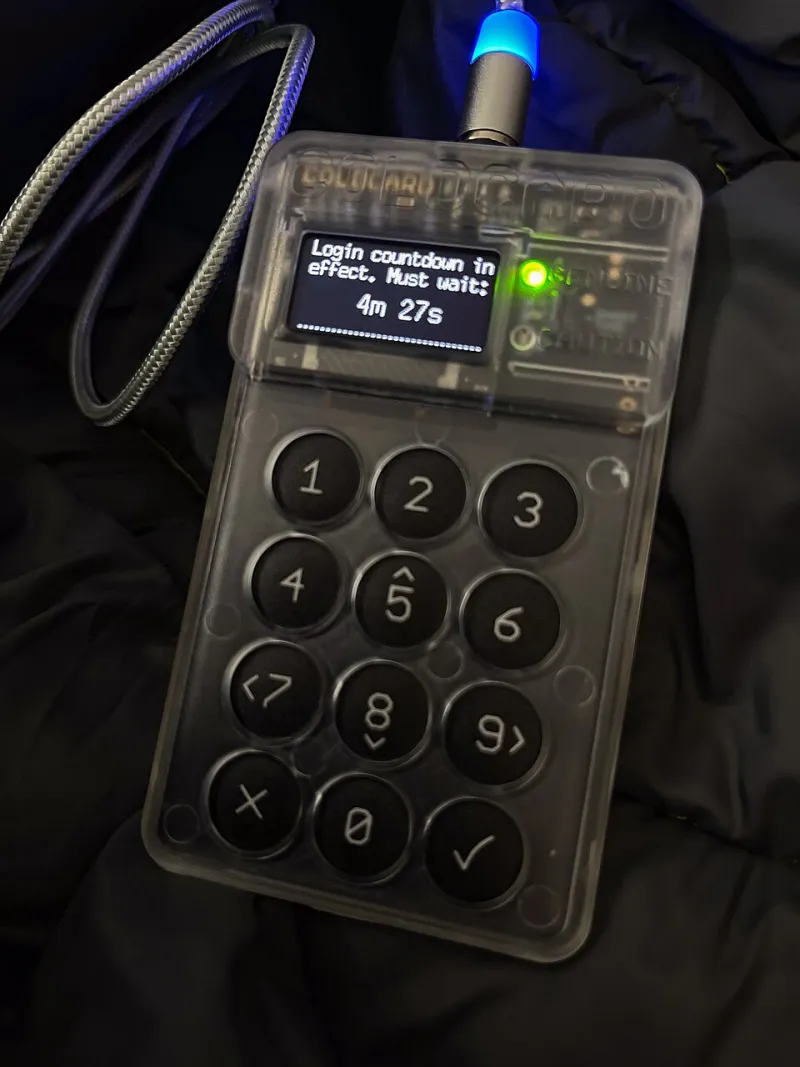
Photo: Tony Webster, CC BY 2.0, via Wikimedia Commons
For much of cryptocurrency's early history, the custody question was treated as a binary choice: either you controlled your own keys, or someone else did. Today, the landscape is considerably more nuanced. Hardware wallets have grown more sophisticated, exchange custody has become more institutionally robust, and a growing category of hybrid solutions has emerged to serve investors who want elements of both approaches.
At the same time, the regulatory environment in the United States has evolved in ways that make custody decisions carry real legal and financial consequences — not just security implications. Whether you are a long-term holder, an active trader, or an institution managing significant allocations, the custody question in 2025 deserves careful, individualized analysis.
Understanding What Custody Actually Means
In the context of digital assets, custody refers to who controls the private keys that authorize transactions on a blockchain network. This distinction matters enormously because, unlike a bank account, there is no central authority capable of reversing an unauthorized transfer or recovering lost credentials.
Exchange custody means that a platform such as Coinbase, Kraken, or Gemini holds private keys on behalf of users. The investor sees a balance and can execute trades, but the underlying cryptographic control rests with the exchange. Self-custody means the investor holds their own private keys — either through a software wallet on a personal device or, more securely, through a hardware wallet that stores keys offline.
Neither model is universally superior. Each carries a distinct risk profile that aligns differently depending on how an investor uses their digital assets.
Exchange Custody: The Case For and Against
For active traders — those executing multiple transactions daily or engaging with derivatives, lending products, or options — exchange custody is often a practical necessity. Moving assets on and off a hardware wallet introduces friction and latency that is incompatible with time-sensitive trading strategies. Centralized platforms also consolidate tax reporting, generating transaction histories that simplify year-end compliance under IRS guidelines.
However, exchange custody introduces counterparty risk that should not be minimized. The collapses of FTX, Celsius, and Voyager between 2022 and 2023 demonstrated that even platforms with substantial reputations can become insolvent with limited warning. In bankruptcy proceedings, exchange-held crypto assets are frequently treated as unsecured creditor claims, meaning retail users may recover only a fraction of their holdings — or nothing at all.
Insurance coverage on exchange-held assets is frequently misunderstood. Most major US exchanges carry FDIC insurance only on cash deposits held in partner banks, not on digital asset balances. Coinbase, for instance, maintains commercial crime insurance covering certain losses from external theft or employee fraud, but coverage limits and exclusions vary considerably and are not equivalent to deposit insurance.
For US investors, it is worth noting that the regulatory status of exchanges continues to evolve. SEC enforcement actions and ongoing legislative debates around the classification of digital assets as securities mean that the compliance posture of any given platform could shift materially within a short timeframe.
Self-Custody: Security and Responsibility
Self-custody through a hardware wallet — devices such as those produced by Ledger or Trezor — eliminates counterparty risk by design. An investor's assets cannot be affected by an exchange insolvency, a platform hack, or a regulatory action against a third party. For long-term holders who measure their investment horizon in years rather than hours, this is a compelling structural advantage.
The trade-offs are equally real. Hardware wallets require the investor to manage seed phrases — typically a sequence of 12 or 24 words that can restore a wallet if the device is lost or damaged. If that seed phrase is lost, stolen, or destroyed without a backup, the assets it controls are permanently inaccessible. There is no customer support line, no account recovery process, and no regulatory mechanism for recourse.
The security discipline required for effective self-custody is also non-trivial. Seed phrases must be stored physically, ideally in multiple secure locations, using materials that resist fire and water damage. Software wallets — applications on a smartphone or computer — offer greater convenience but are exposed to the security vulnerabilities of the host device, including malware, phishing attacks, and SIM-swapping schemes.
From a tax reporting perspective, self-custody introduces additional complexity. Each transaction must be manually tracked or managed through dedicated crypto tax software such as CoinTracker or Koinly, since there is no centralized platform generating consolidated reports. For investors with high transaction volumes across multiple wallets and protocols, this can represent a meaningful administrative burden.
Matching Custody to Investor Profile
The optimal custody arrangement varies considerably across investor types.
Long-term holders (HODLers) accumulating Bitcoin, Ethereum, or other major assets with no intention of trading in the near term are generally best served by hardware wallet self-custody for the majority of their holdings. The absence of counterparty risk aligns naturally with a multi-year investment horizon, and the administrative overhead of self-custody is manageable when transaction frequency is low.
Active day traders require the speed and liquidity access that only exchange custody provides. For this group, the practical recommendation is to maintain only the capital needed for active trading on exchange platforms, while transferring any longer-term holdings to self-custody on a regular basis.
Options traders and DeFi participants often interact with protocols that require assets to be held in compatible wallets. Self-custody through a software or hardware wallet connected to Web3 applications is typically necessary, though this introduces smart contract risk in addition to the standard custody considerations.
Institutional and high-net-worth investors may benefit most from qualified custodian arrangements — regulated entities such as Anchorage Digital or BitGo that combine institutional-grade security with regulatory compliance and insurance coverage designed for larger balances. These solutions carry fees that are impractical for retail-scale holdings but offer a level of structural protection that neither retail exchanges nor individual self-custody can fully replicate.
A Decision Framework for 2025
Before settling on a custody arrangement, US investors should work through several key questions.
How frequently do you transact? High-frequency traders should lean toward exchange custody for working capital, with self-custody for reserves. Infrequent transactors gain more from self-custody's risk profile.
What is your total digital asset exposure? Holdings that represent a meaningful portion of net worth warrant greater security investment — both in terms of hardware and operational procedures — than speculative allocations.
Are you prepared to manage seed phrase security responsibly? Self-custody is only as secure as the weakest link in your personal security practices. Honest self-assessment here is essential.
What are your tax reporting obligations? Active traders may find that exchange-generated reports meaningfully reduce compliance costs, partially offsetting the counterparty risks of exchange custody.
The custody decision is not permanent. Many experienced investors maintain a tiered approach — a hardware wallet for core long-term holdings, an exchange account for trading capital, and periodic reassessment as their portfolio and activity patterns evolve. In 2025, that flexibility is both available and advisable.