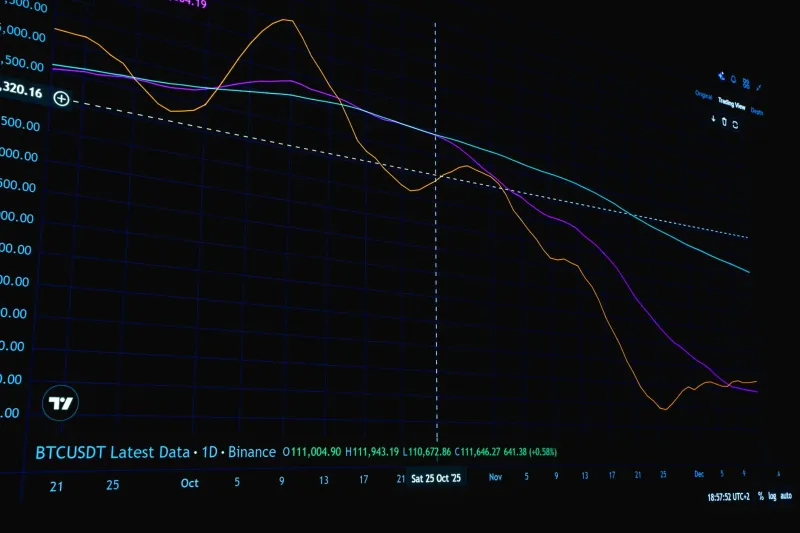
Altcoin Cycles and the Retail Timing Problem: Why Most Traders Enter the Party After Last Call
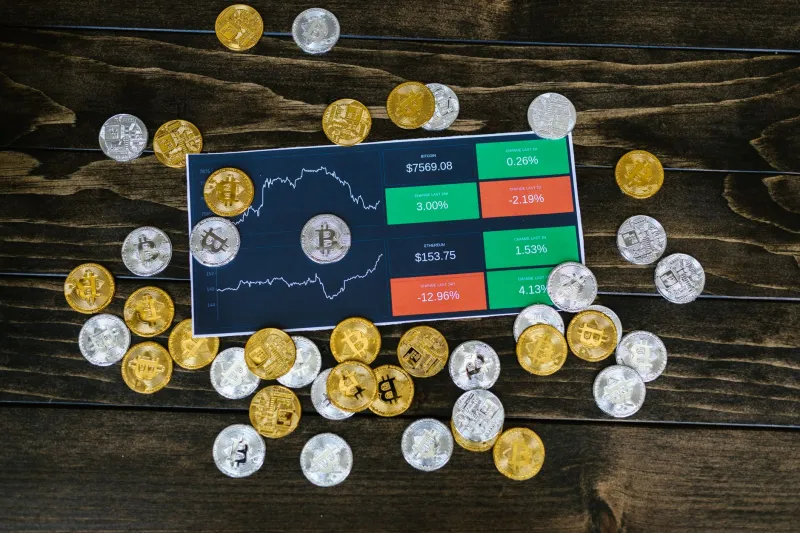
The promise is seductive and, to a point, historically grounded: after Bitcoin establishes a new price range, capital rotates into altcoins, producing outsized percentage gains for early participants. This pattern has repeated across multiple market cycles with enough consistency to generate a dedicated vocabulary — altseason, altcoin rotation, dominance breakdown — and an entire class of traders whose strategy centers on capturing it.
The problem is that most of them don't. The pattern is real. The timing execution is where the strategy collapses, and it collapses in a predictable direction: retail traders enter too late, hold through the distribution phase, and exit during the subsequent drawdown at a loss. Understanding why this happens — and what signals actually precede genuine altcoin outperformance — requires moving beyond price charts and into the structural mechanics of how capital moves through the digital asset market.
The Cycle Structure That Creates the Illusion
Bitcoin's market cycles have historically followed a recognizable, if imprecise, sequence. An accumulation phase, characterized by relatively flat prices and declining volatility, gives way to a markup phase driven by institutional and early retail participation. As Bitcoin's gains become widely publicized, late retail capital enters — often near or after a local top — and subsequently seeks higher-percentage opportunities in smaller-cap assets.
This dynamic creates the conditions for altcoin outperformance, but it also sets the stage for the retail timing failure. By the time Bitcoin dominance begins declining visibly — the metric most commonly cited as a signal for altseason entry — the rotation has often already been underway for weeks among participants with faster information and execution. The decline in dominance that retail traders observe on a chart is frequently the lagging confirmation of a rotation that sophisticated actors initiated earlier.
Historical cycle data from 2017, 2020-2021, and the partial cycle of 2023-2024 illustrates this consistently. In each case, the most significant altcoin gains were concentrated in a relatively brief window, and the assets that produced those gains had already begun accumulating on-chain before their price performance became visible to observers relying on traditional metrics.
Why Macro Signals Alone Are Insufficient
A common approach to altcoin timing uses macro indicators — Federal Reserve policy expectations, risk appetite metrics, Bitcoin's relative performance versus traditional assets — as the primary entry signal. The reasoning is intuitive: when the broader financial environment is favorable to risk assets, capital flows into progressively riskier assets, with altcoins representing the far end of the risk spectrum.
This framework is not wrong, but it is incomplete in a way that systematically disadvantages retail traders. Macro conditions set the ceiling for risk appetite; they do not determine the specific timing or sequencing of altcoin rotations within a favorable macro environment. A permissive interest rate environment might support a 12-month window of altcoin outperformance, but the majority of gains within that window could occur in a 6-week period that begins well before macro signals confirm the trend.
The traders who rely exclusively on macro timing tend to enter after the initial acceleration is already priced in, capture a portion of the remaining move, and then hold through the inevitable drawdown because the macro environment still appears supportive. The environment may remain supportive while the specific altcoin trade has already peaked.
On-Chain Signals That Have Preceded Genuine Altseason Conditions
Several on-chain metrics have demonstrated utility as leading indicators of altcoin rotation, though none should be treated as mechanical entry signals in isolation.
Exchange inflow dispersion is one of the more reliable early indicators. During genuine altseason precursors, exchange inflow data shows capital moving into a broad array of mid- and small-cap assets simultaneously, rather than concentrating in a handful of high-profile tokens. This dispersion suggests that buyers with real conviction are accumulating across the sector, not just chasing momentum in the most visible names.
Altcoin active address growth relative to price is another signal worth monitoring. In periods that preceded sustained altcoin outperformance historically, active address counts in the altcoin sector began growing before significant price appreciation. Address growth without corresponding price movement suggests organic accumulation rather than speculative momentum — a distinction that matters considerably for timing.
Stablecoin supply on altcoin-focused DEXs provides a third data point. When stablecoin liquidity on decentralized exchanges concentrated in altcoin pairs begins increasing, it indicates that participants are positioning for purchases rather than simply holding. This precedes price movement in the same way that a rising bid-ask spread precedes a breakout on a traditional chart.
Bitcoin dominance itself remains relevant, but the specific level matters less than the rate of change and the context in which it is occurring. A dominance decline driven by Bitcoin price stagnation while altcoins hold value is a different signal than a dominance decline driven by altcoin appreciation while Bitcoin also rises.
The Exit Problem Is Worse Than the Entry Problem
Even traders who time their altcoin entries reasonably well frequently fail to capture the majority of the cycle's gains because of exit timing errors. Altcoin distribution phases are characterized by high volatility, strong short-term rallies, and sustained narrative momentum — exactly the conditions that make selling psychologically difficult.
Historically, the on-chain signal that has most reliably preceded altcoin cycle tops is an acceleration in exchange inflows from long-dormant wallets. When addresses that have held specific altcoins for six months or longer begin moving assets to exchanges in volume, it indicates that early holders are preparing to sell into strength. This is the digital equivalent of smart money distribution, and it tends to precede the price peak by days to weeks — a window that is visible in on-chain data but invisible on price charts until after the fact.
The Compounding Disadvantage of Cycle Repetition
Perhaps the most damaging aspect of the retail altcoin timing failure is that it repeats. Each cycle, the same pattern emerges: late entry, partial capture of gains, incomplete exit, significant drawdown. Because the narrative of altseason is compelling and the memory of prior gains is vivid, traders re-enter the next cycle with the same behavioral tendencies.
The traders who have consistently navigated altcoin cycles profitably share a common characteristic: they define their entry and exit criteria before the cycle begins, using on-chain data rather than price momentum as their primary signal, and they treat the narrative of altseason as a lagging indicator rather than a leading one.
The party is real. The challenge is arriving before the crowd — and leaving before the lights come on.