Diversification Illusion: Why Crypto Portfolios Collapse Together and How to Build Genuine Downside Protection

The Diversification Promise That Markets Don't Always Keep
Spread your holdings across multiple assets, and you reduce your risk. That principle is foundational to modern portfolio theory — and it works reliably in traditional markets where equities, bonds, real estate, and commodities respond to different economic signals. Crypto investors have largely adopted the same logic, assembling portfolios that mix Bitcoin, Ethereum, mid-cap layer-ones, DeFi tokens, and speculative altcoins under the assumption that variety equals protection.
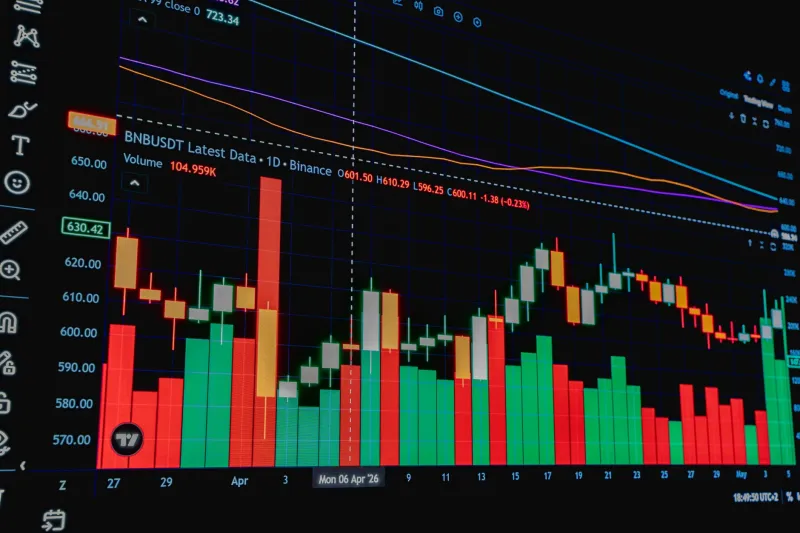
The assumption survives until it doesn't. During the sharp drawdowns of May 2021, November 2022, and the turbulence that followed the FTX collapse, virtually every corner of the digital asset market fell simultaneously and steeply. Traders who believed their diversified holdings would cushion the blow found instead that their entire portfolio had become a single, correlated position dressed in different tickers.
Understanding why this happens — and what can actually be done about it — is one of the more important analytical exercises available to any serious US crypto investor.
Why Correlation Spikes Precisely When You Need Separation
Correlation between assets is not static. It shifts based on market conditions, and the direction of that shift in crypto is almost always the same: assets that behave independently during calm periods tend to move together during stress.
Several mechanisms explain this pattern.
Liquidity withdrawal. When sentiment turns negative, institutional participants and large retail traders reduce exposure broadly. They are not making nuanced judgments about which tokens deserve to fall and which should hold. They are reducing risk, and they do so across the board. This simultaneous selling pressure compresses the distinctions between assets.
Margin and leverage cascades. A large portion of active crypto trading in the US and globally involves leveraged positions. When Bitcoin drops sharply, margin calls trigger forced liquidations not just in Bitcoin but in whatever else leveraged traders hold. Altcoins that had no fundamental reason to decline get sold to meet obligations, dragging their prices down alongside the broader market.
Sentiment as a unifying force. Crypto markets remain heavily sentiment-driven. Fear is not selective. When headlines turn negative — whether due to regulatory pressure, exchange failures, or macroeconomic shocks — retail participants exit positions indiscriminately. The psychological response does not distinguish between a blue-chip layer-one and a speculative DeFi token.
Bitcoin's gravitational pull. Bitcoin still functions as the reserve asset of the crypto ecosystem. When Bitcoin moves sharply in either direction, it sets the tone for everything else. During downturns, the correlation between Bitcoin and the broader altcoin market frequently approaches 0.90 or higher, effectively eliminating the diversification benefit that portfolio holders assumed they had.
Historical Periods When the Correlation Broke
Correlation convergence is not universal or permanent. There have been identifiable periods when segments of the crypto market diverged meaningfully from Bitcoin's trajectory.
During the 2020–2021 DeFi summer, decentralized finance tokens dramatically outperformed Bitcoin for an extended stretch, driven by protocol-specific demand that had little to do with Bitcoin's price action. Similarly, layer-two scaling tokens and certain infrastructure projects have shown sustained periods of independent price behavior tied to development milestones and ecosystem adoption rather than macro sentiment.
Non-fungible token markets in 2021 also demonstrated a degree of decorrelation, with NFT-adjacent tokens surging on collector demand dynamics that operated largely outside Bitcoin's gravitational field — at least temporarily.
The lesson is not that decorrelation is impossible. It is that decorrelation tends to be cyclical, sector-specific, and most pronounced during bull market phases when capital is rotating aggressively into new narratives. During bear markets and systemic shocks, those correlations snap back hard.
Strategies for Building a Portfolio That Holds Under Pressure
Accepting the structural reality of crypto correlation does not mean abandoning the asset class or settling for undifferentiated exposure. It means constructing portfolios with a more sophisticated understanding of where genuine diversification can and cannot come from within digital assets.
Look outside the crypto ecosystem. True diversification for a crypto-heavy portfolio often requires assets that operate on fundamentally different economic logic. US Treasury bills, short-duration bonds, and commodity positions have demonstrated genuine negative or near-zero correlation to crypto during stress periods. For US investors, Series I bonds and money market instruments have served as effective buffers during crypto drawdowns. Adding these to a digital asset-heavy portfolio is not a retreat from crypto conviction — it is sound portfolio construction.
Evaluate stablecoins as a tactical allocation. Holding a portion of a portfolio in high-quality, regulated stablecoins — those backed by US Treasuries or cash equivalents with transparent auditing — provides a functional cash position within the crypto ecosystem. During sharp downturns, this allocation preserves capital and creates dry powder for re-entry. It is not a long-term growth strategy, but it is a legitimate risk management tool.
Assess sector exposure, not just token count. Holding twenty different tokens does not constitute diversification if they all belong to the same sector or share the same risk factors. A portfolio concentrated in DeFi tokens, for instance, carries layered exposure to smart contract risk, liquidity risk, and regulatory scrutiny that affects the entire sector simultaneously. Genuine diversification within crypto requires deliberately mixing sectors — infrastructure, payments, gaming, data storage — while recognizing that correlation will still compress during macro stress.
Size positions to survive drawdowns, not just optimize for gains. One of the most practical forms of downside protection is position sizing that accounts for correlated drawdowns. If the realistic worst-case scenario for a portfolio is a 70% decline across all holdings simultaneously — which history suggests is plausible — then the total allocation to crypto should reflect what a loss of that magnitude would mean for overall financial health. This is not pessimism; it is arithmetic.
Consider options-based hedging strategies. For more sophisticated US investors, purchasing put options on Bitcoin or Ethereum provides explicit downside protection during drawdowns. The cost of this protection — the options premium — functions as an insurance expense. During quiet periods it represents a drag on returns; during sharp selloffs it can preserve significant capital. Not every exchange or brokerage accessible to US retail investors supports crypto options, but the availability of these instruments has expanded considerably in recent years.
Reframing the Diversification Conversation
The uncomfortable truth about crypto portfolios is that diversification within the asset class primarily serves to capture different upside narratives rather than to manage downside risk. A well-distributed crypto portfolio may outperform a Bitcoin-only position during a bull cycle because it captures multiple growth stories. But during a systemic drawdown, it will not materially reduce the pain.
For US investors who have built significant positions in digital assets, the more productive framing is not "how do I diversify within crypto" but rather "how do I structure my overall financial position so that a severe crypto drawdown does not compromise my broader financial stability."
The answer to that question involves assets, instruments, and allocation logic that extend well beyond the blockchain. Recognizing that boundary — and building portfolios accordingly — is what separates investors who survive market cycles from those who are perpetually starting over after each correction.
At CoinRokka, we believe that clear-eyed analysis of risk is as important as identifying opportunity. The crypto market rewards those who understand its structural characteristics, including the ones that work against naive diversification assumptions.