Ghost Depth: How Order Books Deceive Retail Traders and What You Can Do About It
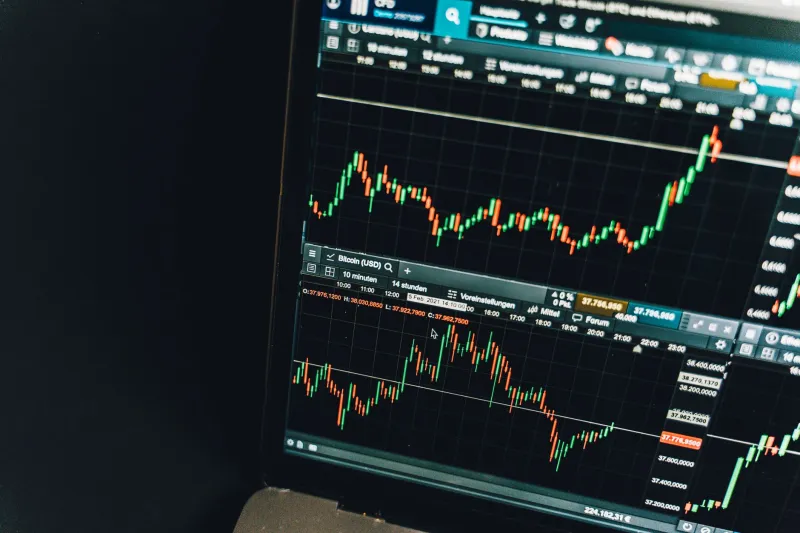
When a new trader opens a cryptocurrency exchange for the first time, the order book appears to be one of the most honest features on the screen. Rows of bids stacked below the current price, rows of asks lined up above it — a live, transparent ledger of where buyers and sellers are willing to transact. It seems like an unambiguous window into market reality.
It is not.
For retail participants in the US crypto market, treating the order book as a reliable guide to real supply and demand is one of the most common — and costly — analytical errors available. The visible depth you see at any given moment is frequently a curated illusion, constructed by market makers and algorithmic traders who understand precisely how retail psychology responds to large order clusters. Learning to distinguish genuine liquidity from manufactured theater is not optional for traders who want to protect their capital. It is foundational.
What the Order Book Is Actually Showing You
At its core, a cryptocurrency order book is a real-time list of resting limit orders — bids representing willingness to buy at a specified price, asks representing willingness to sell. Exchanges aggregate these and display them as a depth chart or a tiered table. The wider the spread between the best bid and best ask, the thinner the market. Large clusters of orders near the current price theoretically indicate strong interest at those levels.
The problem is that none of these orders are committed capital until they are executed. A limit order placed at $60,000 on a Bitcoin pair can be canceled in milliseconds. This is not a bug — it is a feature that sophisticated participants exploit deliberately and continuously.
The Mechanics of Order Book Painting
Order book manipulation, often called "painting the tape" or "spoofing," involves placing large visible orders with no genuine intention of letting them fill. The goal is behavioral: induce retail traders to interpret the order cluster as a meaningful support or resistance zone, then cancel the order the moment price approaches it.
Consider a practical example. A well-capitalized trader wants to accumulate a large Bitcoin position at $61,200. To discourage others from buying ahead of them and to suppress the price, they place a massive ask wall at $62,000 — say, 150 BTC — creating the visual impression of heavy resistance. Retail traders see this wall, assume the price will struggle to break through, and either refrain from buying or open short positions anticipating a rejection. Once enough selling pressure builds and price dips toward the trader's target, the ask wall disappears instantly, and the accumulation begins. The wall was never real. It was a prop.
The same dynamic works in reverse for manufactured support. A large bid wall at a round number like $60,000 encourages retail buyers to enter, believing institutional demand sits below them. When price threatens that level, the wall vanishes — and the traders who bought expecting a bounce are left holding positions with no floor beneath them.
Why Exchanges Don't Solve This Problem
Spoofing in traditional securities markets is illegal under US federal law, specifically the Commodity Exchange Act and subsequent Dodd-Frank provisions. The CFTC has pursued enforcement actions against spoofing in futures markets, including crypto derivatives traded on regulated venues like the CME.
However, the spot cryptocurrency market operates largely on unregulated exchanges, many of which are domiciled outside US jurisdiction. Platforms like Binance's international entity, OKX, and others have minimal obligation to enforce anti-spoofing rules on their spot order books. Even on US-registered exchanges, enforcement at the individual order level is inconsistent. The practical result is that retail traders on most major platforms are exposed to order book manipulation with little institutional protection.
This does not mean you are helpless. It means the burden of detection falls on you.
How to Distinguish Real Liquidity from Artificial Depth
Watch for order persistence over time. Genuine resting orders from passive participants — institutional desks, market makers providing real quotes, retail limit orders — tend to persist for meaningful durations. Orders that appear, hold position as price approaches, and then vanish before execution are almost always spoofed. Many trading terminals and third-party tools allow you to record or replay order book snapshots. If a large order consistently disappears when price draws near, treat it as decoration rather than data.
Analyze order flow, not just order presence. Order flow analysis tracks the actual transactions occurring in the market — the trades that execute, not the orders that merely sit. Tools like Bookmap, Sierra Chart, or Exocharts visualize executed volume alongside resting orders, making it far easier to identify where real buying and selling is occurring versus where orders are simply displayed. When you see a large bid wall accompanied by negligible actual buying at that level, skepticism is warranted.
Observe the spread between visible depth and traded volume. A level showing 200 BTC of resting bids that sees only 2 BTC of actual execution before the wall disappears is a red flag. Genuine demand absorbs selling pressure. Painted orders evaporate under it.
Note clustering at psychological price levels. Spoofed orders disproportionately appear at round numbers and widely-watched technical levels — $70,000, $65,000, the 200-day moving average equivalent. Real liquidity can also concentrate at these points, which is what makes them effective as manipulation targets. The distinguishing factor is behavior under pressure: real support holds or fails gradually; manufactured support vanishes instantaneously.
Compare depth across exchanges. If a large order wall appears on one exchange but not on comparable venues trading the same asset, the probability of spoofing increases substantially. Genuine large-scale demand typically manifests across multiple markets simultaneously.
Exchange-Specific Red Flags for US Traders
US traders should be particularly cautious when trading on platforms that lack robust surveillance infrastructure. Exchanges with thin compliance teams, no US regulatory registration, and high leverage offerings have historically been more permissive environments for order book manipulation.
Even on registered US platforms, watch for unusual order book behavior during low-liquidity windows — early morning Eastern Time, weekends, and immediately following major macro announcements when thin markets amplify the impact of artificial depth. These periods offer the highest return on manipulation effort for sophisticated actors.
Adjusting Your Trading Approach
The practical implication of all this is straightforward: stop treating visible order book walls as reliable technical signals on their own. They are one data point among many, and they are the most easily falsified data point available.
Instead, build entries and exits around confirmed order flow — what is actually trading, not what is merely displayed. Use time-and-sales data to verify that price levels are attracting genuine transaction volume. Treat large order clusters as potential traps to be tested rather than guarantees of price behavior. And when in doubt, reduce position size until price action itself confirms the thesis your order book reading suggested.
The crypto market rewards traders who see clearly. Order books are designed to obscure. Understanding that distinction is the beginning of genuine market literacy.