Margin Trading in Crypto: The Mechanics Behind Mass Liquidations and How Disciplined Traders Survive Them

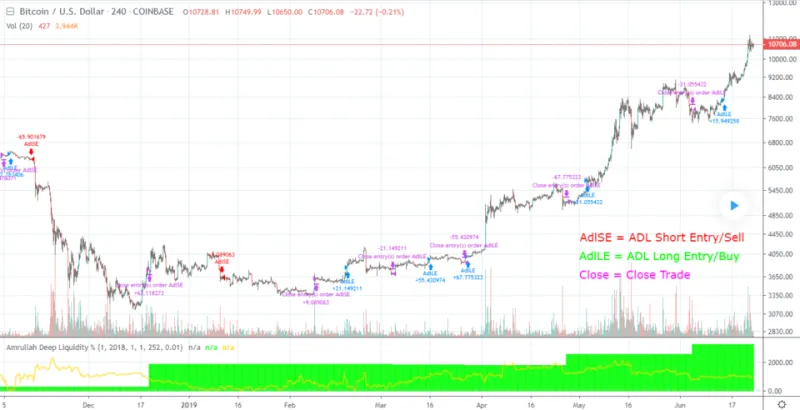
Photo: cryptocurrency trading screen with leverage liquidation chart and red market data, via blog.amikom.ac.id
For every trader who posts a screenshot of a 10x leveraged Bitcoin position turning $5,000 into $50,000, there are dozens more who quietly closed their accounts after a single bad session wiped out months of capital. The mathematics of leverage are brutally impartial — they accelerate outcomes in both directions, and in cryptocurrency markets, where 10% daily swings are routine, the margin for error is vanishingly small.
At CoinRokka, we cover the mechanics and the reality. This article is not a warning to avoid leverage entirely. It is a structured examination of how leverage works, what conditions transform it from a tool into a trap, and what separates the minority of traders who use it sustainably from the majority who do not.
How Leverage Actually Works in Crypto Markets
When a trader opens a leveraged position on a crypto exchange, they are borrowing capital to control a position larger than their account balance. A 10x leveraged long on Bitcoin means a $1,000 deposit controls a $10,000 position. A 5% move in the right direction produces a 50% gain on the original deposit. A 5% move against the position, however, triggers liquidation — the exchange closes the trade and the trader loses their entire margin.
The liquidation price is not a distant scenario. It is a mathematical certainty if the market moves far enough against the position. On a 20x leveraged trade, the liquidation threshold sits just 5% away from the entry price. In a market where Bitcoin has historically moved 8–12% in a single trading session during volatile periods, that buffer evaporates in hours.
Most retail traders on US-accessible platforms encounter leverage through perpetual futures contracts, which have no expiry date but carry a funding rate — periodic payments between long and short holders based on market sentiment. When markets trend strongly bullish, funding rates on long positions can climb to 0.1% or higher every eight hours, meaning a position costs roughly 3% per month just to hold, before accounting for any price movement.
The Anatomy of a Retail Liquidation Cascade
In May 2021, Bitcoin fell approximately 30% in a single week, dropping from near $58,000 to below $40,000. According to data aggregated by Coinglass, that week saw more than $8 billion in leveraged long positions liquidated across major derivatives exchanges. The mechanism was self-reinforcing: as prices fell, leveraged longs were liquidated, forcing exchanges to sell the underlying asset, which pushed prices lower, triggering further liquidations.
A similar dynamic unfolded in November 2022 following the collapse of FTX. Traders holding leveraged positions across multiple assets were liquidated not because their underlying thesis was wrong, but because the market moved faster than their risk parameters could accommodate.
The traders caught in both events shared a common profile: they had sized positions based on anticipated upside rather than maximum tolerable downside, and they had underestimated how quickly an exchange can close a position when margin requirements are breached.
Why US Traders Face Additional Structural Risks
Regulatory constraints in the United States create a specific set of conditions that amplify leverage risk for domestic traders. The Commodity Futures Trading Commission (CFTC) restricts retail access to high-leverage crypto derivatives on US-registered platforms, which has pushed many American traders toward offshore exchanges that operate outside domestic oversight.
Those offshore venues often offer leverage ratios of 50x to 125x — multiples that would be impractical on regulated domestic platforms. The absence of investor protections, combined with the opacity of some offshore exchange operations, means that liquidations on these platforms can occur under conditions that differ from what traders expect. Spreads widen during volatile periods, liquidation engines may not function as disclosed, and recovering funds after a forced close is rarely straightforward.
US traders who remain on CFTC-registered platforms face lower maximum leverage but also receive more predictable liquidation mechanics and access to formal dispute processes — a trade-off that favors capital preservation over maximum speculative exposure.
A Practical Framework for Evaluating When Leverage Makes Sense
The question is not whether leverage should ever be used — it is whether the specific conditions of a given trade justify the additional risk. The following framework provides a structured approach to that evaluation.
Position sizing first, leverage second. Before selecting a leverage multiplier, determine the maximum dollar amount you are willing to lose on the trade. That figure — not the potential gain — drives the position size. If a 1% adverse move should not cost more than $200, work backward from that constraint to determine what position size is appropriate, then apply leverage only if it fits within that boundary.
Assess the volatility environment. Leverage is most dangerous during periods of elevated implied volatility, macro uncertainty, or thin liquidity — conditions that are common in crypto markets. Using a 10x leveraged position during a period when 24-hour Bitcoin volatility exceeds 4% is materially different from using the same leverage when daily ranges have compressed to 1–2%.
Set hard stops before entry. A stop-loss order placed at the time of entry, not after the position moves against you, is the single most reliable risk management tool available to retail traders. Traders who enter leveraged positions without predetermined exits are relying on their own judgment under emotional pressure — a condition that consistently produces poor decisions.
Limit leverage exposure to a defined portfolio percentage. A reasonable rule applied by many professional traders is that total leveraged exposure should never exceed 5–10% of investable capital. The remaining portfolio remains in spot positions or cash equivalents, insulating overall account health from a single leveraged trade going wrong.
Account for funding costs on extended holds. Perpetual futures are not designed for multi-week holds. If a trade thesis requires patience over weeks or months, spot exposure or options structures are more appropriate instruments than leveraged perpetuals with compounding funding obligations.
The Behavioral Dimension
Beyond mechanics and frameworks, leverage has a psychological dimension that technical rules alone cannot fully address. The experience of watching a leveraged position approach liquidation triggers responses — anxiety, denial, the impulse to add margin to delay the inevitable — that are difficult to manage in real time.
The traders who use leverage sustainably tend to share one characteristic: they have internalized the possibility of a total loss on any given leveraged trade before they enter it. That psychological preparation does not make losses painless, but it prevents the reactive decisions that turn a bad trade into an account-ending event.
Leverage in cryptocurrency markets is a precision instrument being wielded by many participants as a blunt object. Understanding the mechanics, respecting the structural risks specific to US traders, and applying a disciplined position-sizing framework will not guarantee profitable outcomes — but they substantially improve the odds of still having capital to trade with tomorrow.